


A GARDENIZI FIELD GUIDE
How to Train Bougainvillea Branches for More Flowering Growth
A practical way to pinch, guide and support flexible new shoots—then use the plant’s response to decide what to do next.
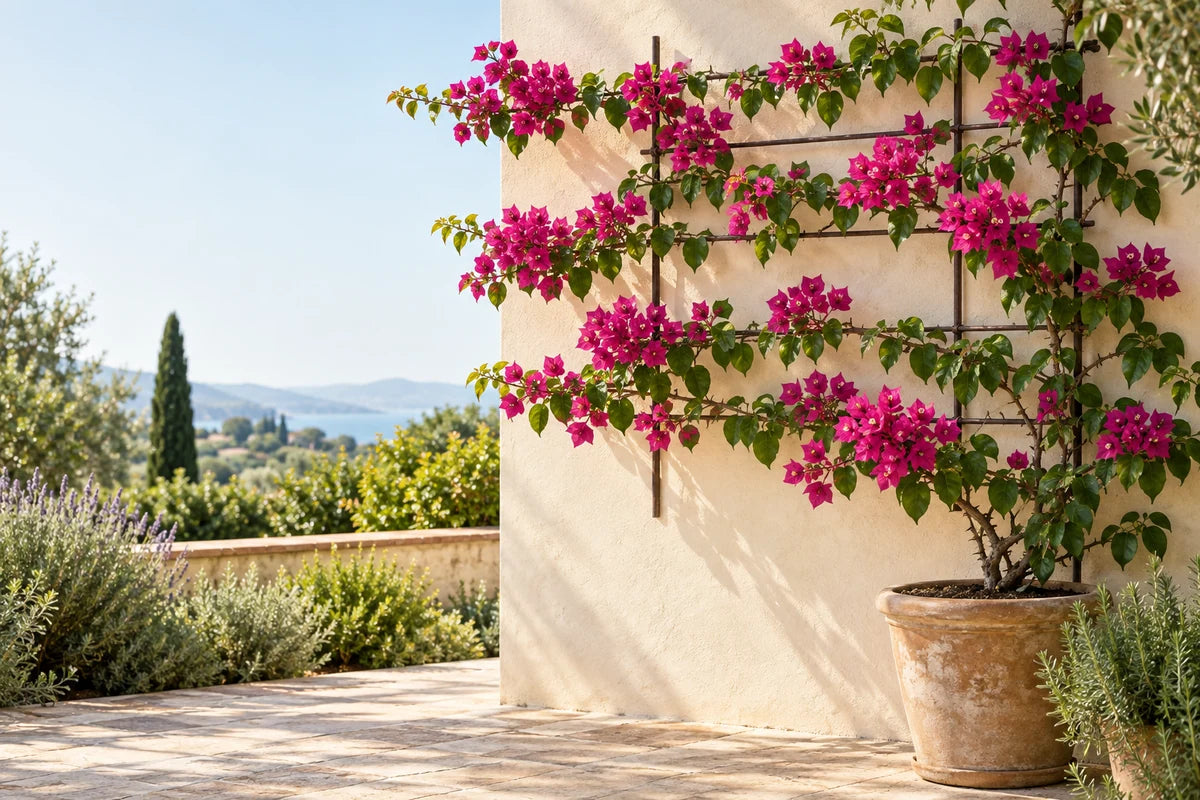
A long bougainvillea cane does not need to stay a long bare cane. When a healthy, flexible shoot is pinched and guided into a broad curve, its side buds have a better chance to become the next useful shoots in your framework. That is a growth-management technique, not a shortcut that guarantees a wall of bracts.
Healthy, actively growing, bendable shoots—not drought-stressed, cold-damaged or brittle wood.
One long, gradual curve held at several points—not a sharp corner at one clip or tie.
Inspect the nodes for side-bud activity, then select the shoots that build the shape you want.
START WITH THE RIGHT SHOOT
What to train—and what to leave alone.
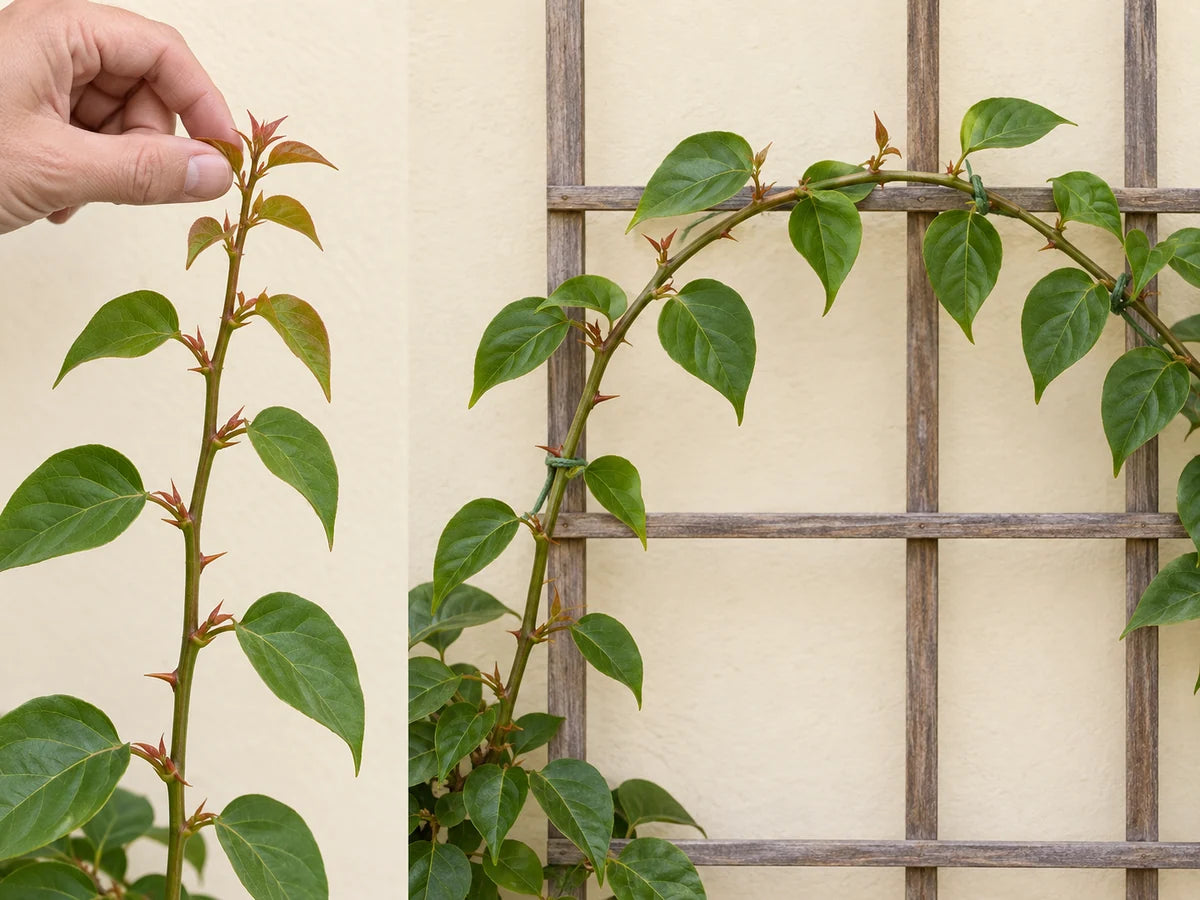
- Good candidate: a healthy young cane that can move a little between your fingers without audible cracking, deep creasing or resistance.
- Better timing: active warm-season growth, after the plant has recovered from repotting, cold injury or a dry spell. In frost-prone climates, do not make a major shaping cut just before cold weather.
- Leave it alone: thick old wood, a cane that is already carrying the exact display you want, or a plant that is limp, root-bound, pest-damaged or newly transplanted.
- Protect yourself: wear gloves and move slowly. Many bougainvilleas have sharp thorns, especially along vigorous shoots.
THE FOUR-MOVE METHOD
Build a branch framework in a sequence you can stop and reassess.
Pinch the soft tip
Remove only the tender growing point, just beyond the top usable leaf or node. This is different from cutting the cane halfway back: the goal is to pause the leader, not erase all of its established leaf area.
Set the direction by hand
Hold the shoot near its base with one hand and guide farther along the stem with the other. Move it through a broad, shallow arc toward the line of your trellis, wall or balcony rail. A curve is safer than a kink.
Support, don’t pull
Use two or more support points along a longer cane. A clip or tie should hold the chosen path after you have positioned the stem; it must not be doing the work of bending rigid wood. Keep each attachment clear of a bud, thorn and tight bend.
Wait for the nodes to answer
Leave useful leaves in place while the cane responds. Look for swelling buds and new side shoots at the leaf attachments. Then choose outward-facing, well-spaced shoots for the next layer of the framework.
WHERE THE NEXT SHOOT STARTS
Read the node, not the empty length of stem.
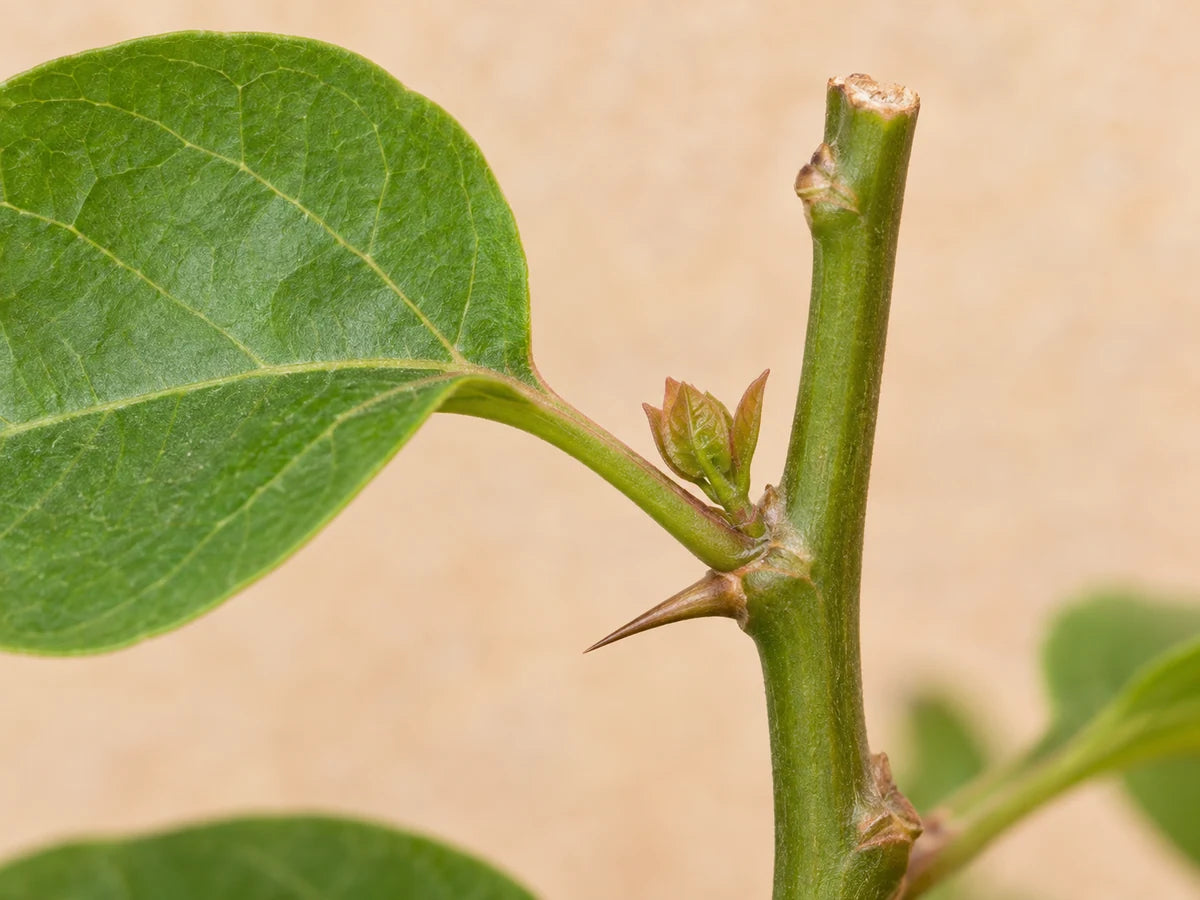
A node is the point where a leaf attaches to the cane. A side bud can sit in that leaf axil, beside the leaf base. Once the tip is no longer the only active growing point, those buds are the useful places to inspect.
Do not strip all large leaves as a routine. Leaves help fuel the response. Remove one only when it is damaged, severely crowded, or actually shading a developing shoot you intend to keep.
A FRAMEWORK IS NOT A FLOWER SWITCH
Shape helps. Light, water and plant vigor still decide the display.
Bougainvillea needs abundant direct sun for its best flowering performance. A carefully trained plant in low light will still tend toward weak, leafy growth.
Water thoroughly when the potting mix and plant condition call for it, then let the root zone breathe. Constantly saturated media can undermine root health; a fixed calendar cannot account for weather and pot size.
Too much nitrogen can favor leafy extension over flowers. Use a fertilizer program appropriate for flowering containers and follow the product label rather than feeding repeatedly to force a response.
Use a pot with open drainage holes and protect this tropical plant from frost. Cold stress, poor drainage and weak roots are problems to solve before more pruning or training.
AFTERCARE AND DIAGNOSIS
Let the plant tell you whether to continue, pause or change course.
MAYA'S PRACTICAL PICK
Keep the new position without a hard tie around the cane.
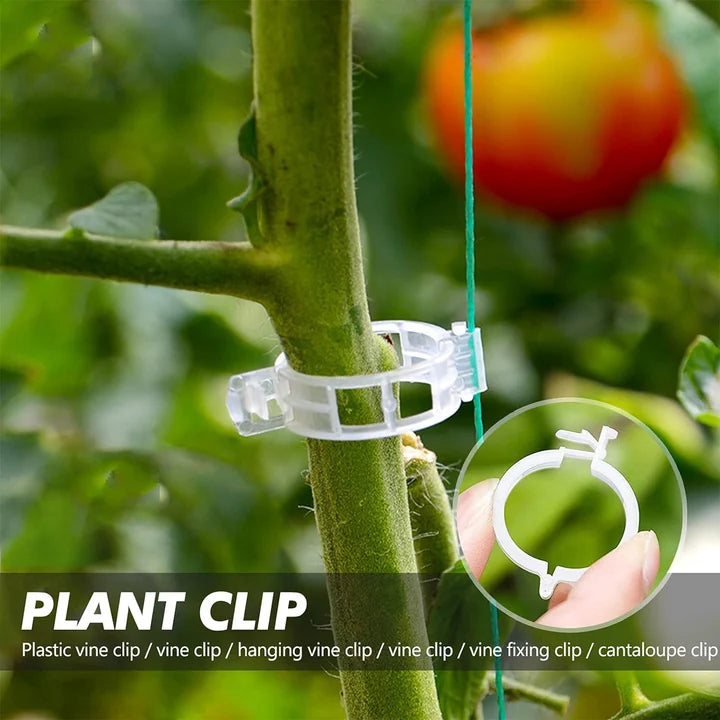
Garden Clips can help support stems against a trellis or other structure. Choose a size that fits the real stem and support, use more than one point for a long curve, and inspect the fit as growth thickens. A clip is a support tool—not a way to force old wood into a new shape.
Explore Garden ClipsRecommended by Maya Collins. Product sold by Gardenizi.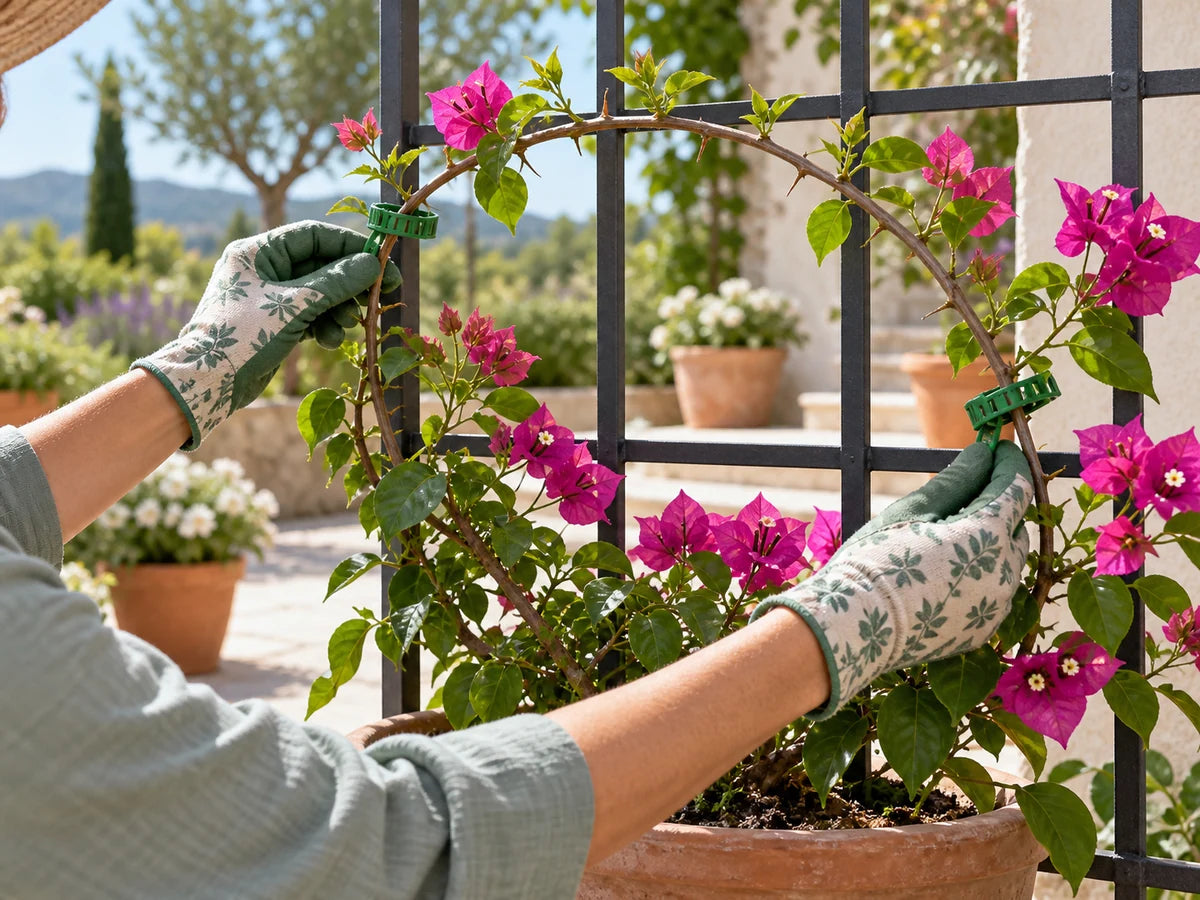
A SMALL WEEKLY CHECK
Guide new shoots while they are still easy to guide.
Once selected side shoots begin extending, decide which ones will become a new horizontal line, a filling branch or an opening you deliberately keep clear. Make small adjustments before the wood hardens. Each time you add support, check the clip, the bark, the nearest node and the direction of the shoot—not just the overall silhouette.

FOR CONTAINER GROWERS
Give the root zone a mix that drains as well as it holds moisture.
Hydrated coconut coir can be one component of a container mix for bougainvillea. It is a growing-medium ingredient, not a fertilizer or a flowering trigger. Blend it into a suitable mix, use a pot with drainage holes, and adapt watering to the actual pot, weather and plant rather than a fixed routine.
Explore Organic Coconut CoirFollow the product directions and use it as part of a complete potting approach.TRAIN WITH PATIENCE
One well-chosen branch is better than one forced bend.
Start with flexible growth, create a broad supported path and make the next decision only after the nodes respond.