


 A Gardenizi field guide
Feed the cause, not the worry
Why isn't fertilizer working?
Before you add another scoop, check the five conditions that decide whether roots can actually use it.
The useful shift
Your plant is not ignoring fertilizer.
You fed it. Perhaps you followed with compost tea, kitchen scraps, eggshell water, or a stronger dose because nothing seemed to happen. Yet the leaves still look tired and the growing tip has not moved.
The natural conclusion is that the fertilizer was too weak. Often, the more useful question is different: what is preventing the plant from using the nutrients around its roots?
Poor light can limit growth. Saturated soil can push air out of the root zone. Damaged roots cannot absorb efficiently. An unsuitable pH can reduce nutrient availability. Repeated feeding can add enough soluble salts to stress the very roots you are trying to help.
Fertilizer helps only when nutrition is the bottleneck—and the plant is in condition to use it.
The five-gate test
Every gate must be open enough for a response.
Plants make carbohydrates from light, water, and carbon dioxide. Fertilizer supplies mineral nutrients that support growth; it does not replace the energy-producing work of the leaves or the absorbing work of healthy roots.
Growth
Enough light, suitable temperature, and an active growth stage give the plant a reason to use nutrients.
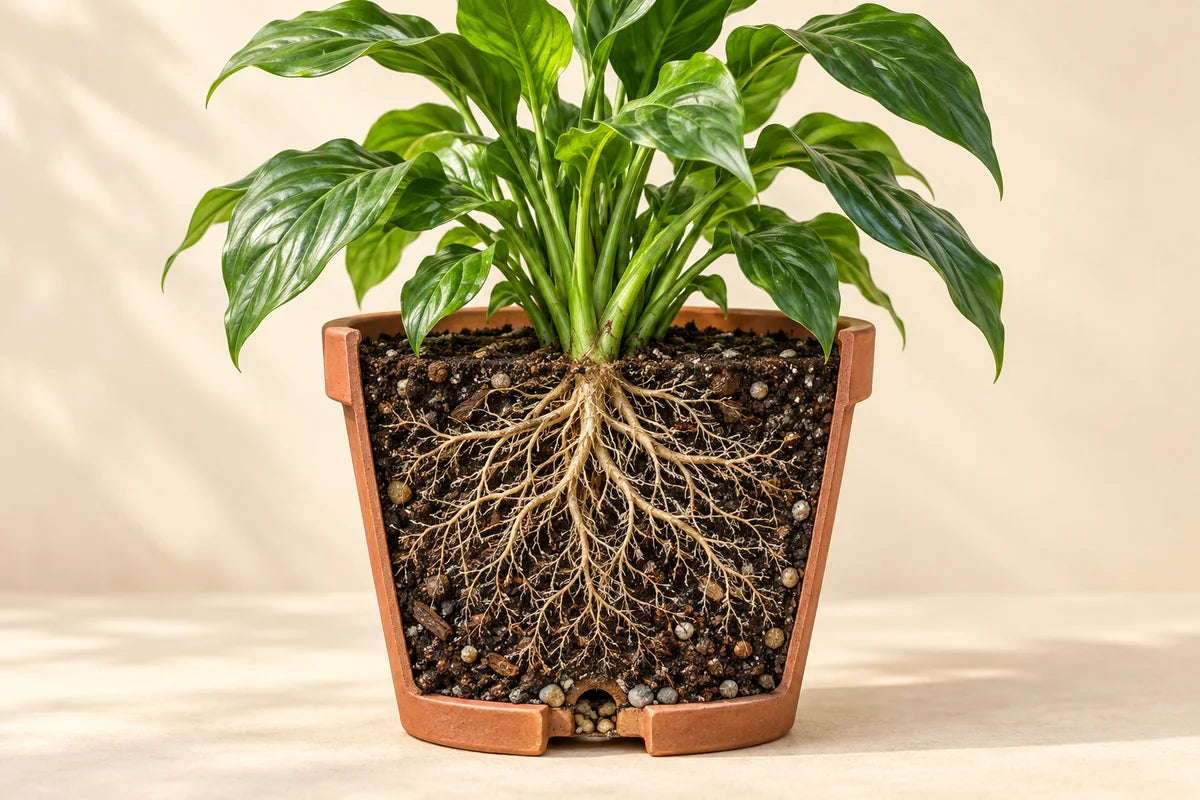
Roots
Firm, functioning roots are the uptake system. Dead or decaying roots cannot be fed back to health by adding more fertilizer.
Water + air
The medium must hold moisture without remaining airless. Roots need oxygen as well as water.
Chemistry
pH and soluble salts influence whether nutrients remain available and whether roots can take up water normally.
Match
The product, concentration, timing, plant type, and growing stage must fit the need you are trying to correct.
A five-minute diagnosis
Let the symptom choose the first check.
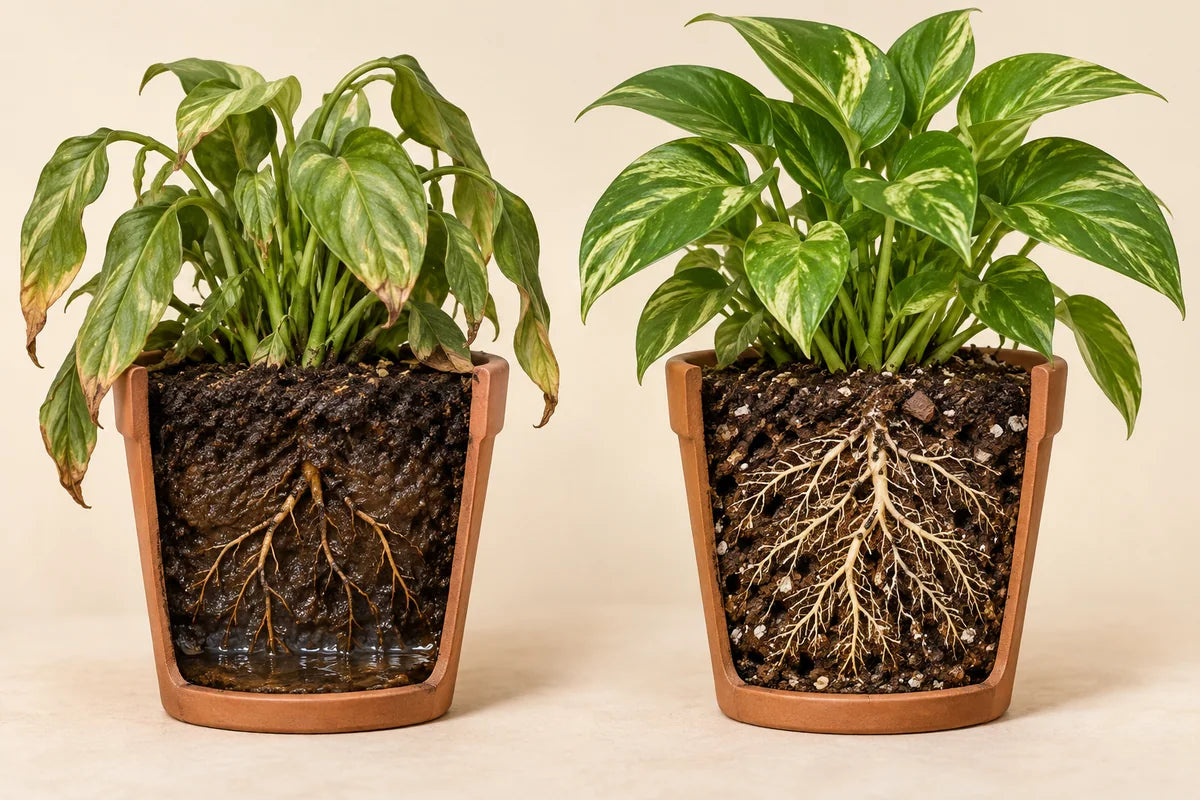
Limp leaves + wet soil
This points first toward poor root aeration, impaired roots, or a watering problem—not a dry pot.
First move
Pause feeding. Check drainage, odor, and how long the medium stays wet.
Healthy color + no new growth
The plant may be between growth cycles, recently transplanted, too cool, or receiving less light than it needs.
First move
Inspect buds and growing tips. Check light and season before changing fertilizer.
Brown tips after repeated feeding
Fertilizer salts, dry-root feeding, or another root-zone stress may be involved.
First move
Stop stacking products. Review what was applied, how much, and when.
Water runs around the root ball
A shrunken or unevenly dry mix can send solution down the pot wall without wetting many roots.
First move
Rehydrate gradually and observe whether the center of the root ball becomes evenly moist.
Yellowing in “rich” soil
Root damage, pH, drainage, nutrient imbalance, or simple leaf aging can resemble a shortage.
First move
Identify which leaves changed first and what changed in care. For garden soil, test before adding more.
Scraps smell or attract flies
The material is decomposing under uncontrolled conditions. That is not the same as making finished compost.
First move
Remove the scraps from a small container and compost them in a managed system.
The root-zone reality
Wet is not the same as watered.
A good growing medium holds water in small pores while leaving larger pores available for air. When a container remains saturated, roots lose the oxygen they need for normal function. When a mix becomes extremely dry or shrinks from the pot, water may bypass the root ball instead.
That is why a plant can wilt in wet soil and why liquid fertilizer can pass through a dry container without creating an even response.
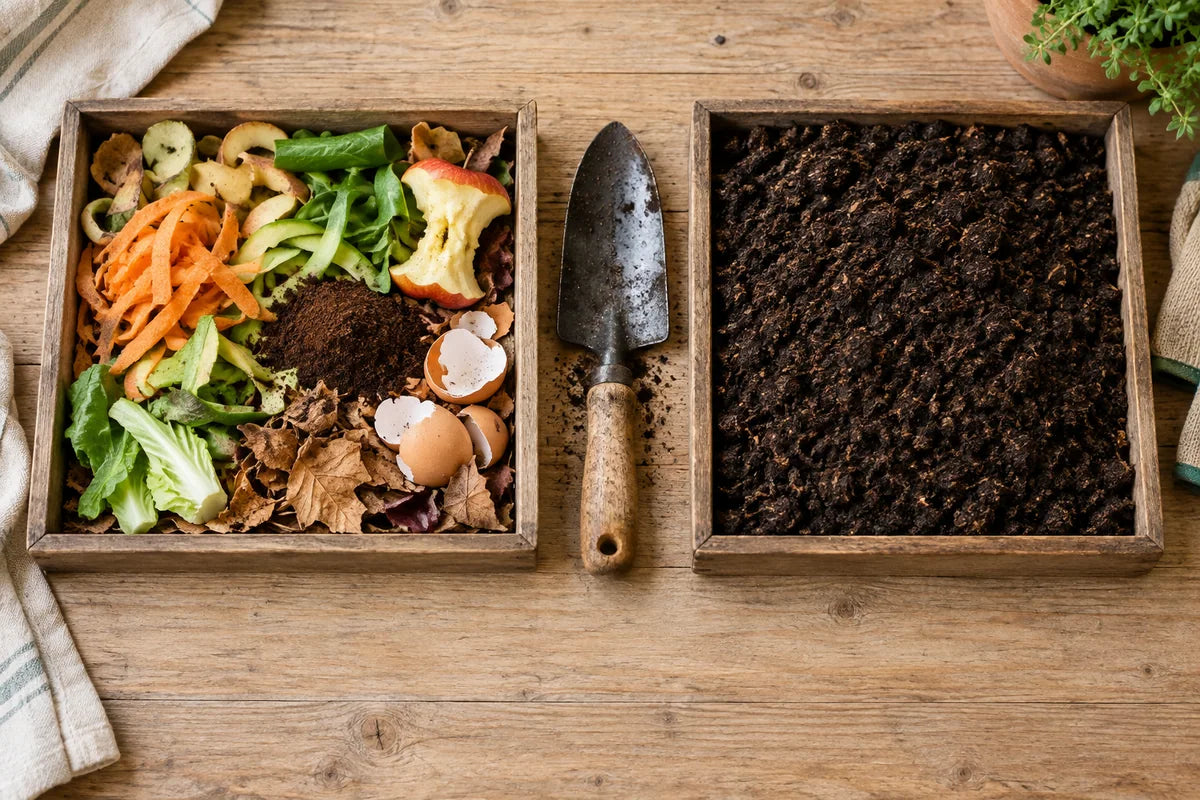
Kitchen scraps, decoded
Ingredients are not finished fertilizer.
Fruit peels, vegetable scraps, coffee grounds, and eggshells contain materials that may eventually become part of useful compost. Fresh scraps, however, do not provide a measured or immediately available fertilizer dose.
Decomposition needs oxygen, moisture, carbon-rich materials, nitrogen-rich materials, and time. In a small plant container, a pocket of wet scraps can be hard to manage. It may stay too wet, lose oxygen, produce odor, or attract pests.
Raw ingredients
Recognizable food scraps and dry browns. Their nutrient release is unmeasured and incomplete.
Managed decomposition
Air, workable moisture, mixing, and time allow microorganisms to break the materials down.
Mature compost
Dark, crumbly, earthy-smelling material in which the original ingredients are difficult to identify.
- Choosing a selection results in a full page refresh.
- Opens in a new window.